List of Underrated Places You Should Visit in Kenya
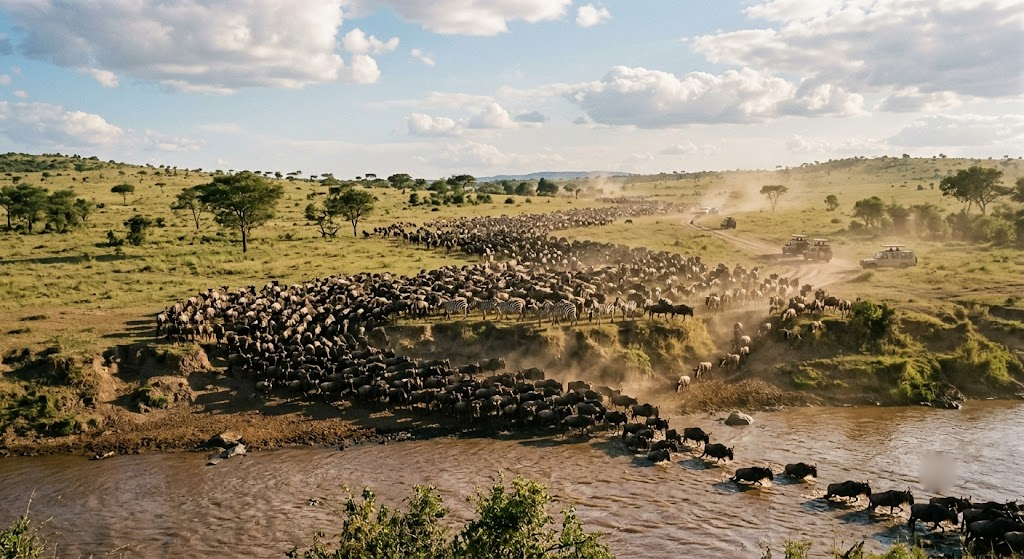
Everyone lands in Nairobi with the same laminated bucket list. Masai Mara for the great migration, maybe a quick dash to Amboseli National Park for that Kilimanjaro backdrop shot, then a few days melting on Diani Beach before flying home. Nothing wrong with that itinerary, honestly. But if you ask me, and I've spent enough time chasing dust trails across this country to have an opinion, the real Kenya lives in the places nobody bothers photographing for the brochure.
The underrated places you should visit in Kenya are the volcanic hills southeast of Amboseli, a rainforest relic in the west that predates the Sahara's dry spell, a desert of salt and silence up north, and a scattering of forests, swamps, and crater lakes that most safari packages skip entirely. These spots exist because Kenya's landscape refuses to be one thing. It's not just savannah. It's rift valley fault lines, coastal coral gardens, alpine bogs, and lava tubes, sometimes within a few hours' drive of each other.
Why Do Kenya's Underrated Destinations Deserve Your Attention?
Here's the thing nobody tells first-time visitors: the tourist industry in Kenya has built an entire economy around maybe six destinations, while the country has dozens more that offer wildlife encounters and landscapes just as striking, minus the convoy of safari vans. I suspect this happens because marketing money flows toward what's already famous. Amboseli gets photographed because it's already been photographed a thousand times. Meanwhile a place like Chyulu Hills sits right next door with fewer crowds and arguably better views of Kilimanjaro, and somehow it stays a footnote.
There's also a safety and authenticity angle here that matters more than people admit. Crowded parks mean crowded roads, noisy engines scattering wildlife before you even lift your binoculars. The lesser-known reserves, community conservancies, and forest trails tend to have stricter, more intimate guiding, which oddly enough makes the whole safari experience feel less like a theme park and more like an actual encounter with the wild.
Explore The Volcanic Hills Of Chyulu Hills National Park
Landscape And Lava Tubes
Chyulu Hills is young, geologically speaking, still considered one of the newest mountain ranges on the continent, and that youth shows in its rolling green cones and the network of lava tubes running beneath the surface. These tubes formed when molten rock cooled on the outside while still flowing inside, leaving hollow volcanic corridors you can actually walk through with a guide. The terrain feels almost otherworldly, all soft grassy slopes stacked one after another like waves frozen mid-roll.
Horseback Safaris And Kilimanjaro Views
What sets this park apart from the standard Kenya safari script is the horseback option. Riding across these hills, with Kilimanjaro looming to the south on a clear morning, gives you a totally different relationship with the landscape than sitting in a vehicle does. You hear the wind, you smell the grass, and honestly the horses seem to know the terrain better than some drivers do. The views here rival anything you'd get from Amboseli, minus the fifty other vehicles jostling for the same angle.
How To Get There
Chyulu Hills sits close enough to Amboseli that most travelers combine both in one loop, usually driving from Nairobi through Emali. It's rough road in sections, so a 4x4 helps, and most lodges arrange transfers if you'd rather not navigate yourself.
Discover Kenya's Last Rainforest At Kakamega Forest Reserve
Endemic Wildlife And Birdlife
Western Kenya holds something the rest of the country doesn't: an actual tropical rainforest, the last surviving remnant of a forest belt that once stretched across Central Africa. Kakamega Forest is home to more than 360 recorded bird species, a figure that alone should put it on every serious birder's radar, alongside primates and plant life found nowhere else in the country. Roughly 80 percent of the flora here has documented medicinal use among local communities, which tells you something about how deeply this forest is woven into daily life, not just tourism brochures.
Guided Nature Walks And Primate Tracking
Walking beneath that canopy, guided by rangers who know every call and rustle, is a completely different rhythm from a game drive. You're tracking colobus monkeys and blue monkeys, listening for the whoop of a great blue turaco, moving at a human pace instead of an engine's. The Kenya Wildlife Service notes this reserve protects what's left of Kenya's slice of a once-vast Central African biodiversity hotspot, and walking through it, you feel that scarcity. This isn't just another patch of jungle. It's the last of its kind here.
How To Get There
Kakamega town is roughly a seven-hour drive from Nairobi, or you can fly into Kisumu and cut that down to about ninety minutes by road. Either way, plan for at least two nights so the forest walks don't feel rushed.
Cross The Salt Pans Of Chalbi Desert And Lake Turkana
Gabra Community Encounters
North of Marsabit, the landscape shifts into something almost lunar. The Chalbi Desert stretches out in salt pans and sand dunes, and the Gabra community who call this region home have built a pastoralist life around its rhythms that predates most maps of Kenya. Spending even a day with Gabra herders, hearing how they navigate water scarcity and read weather patterns, reframes what "wilderness" even means.
Off-Road Desert Expeditions
This isn't a destination for casual drivers. The routes require proper off-road expedition planning, often with local guides who know where the salt crust holds weight and where it doesn't. Combine a Chalbi crossing with a push toward Lake Turkana, and you've got one of the most arid, dramatic stretches of northern Kenya, a landscape that feels closer to Ethiopia's Danakil than anything in East Africa's typical tourist imagery.
How To Get There
Access usually starts from Marsabit town, reached by road from Isiolo, though flights into Marsabit airstrip cut travel time significantly. Budget extra fuel and water. There's no casual detour into a fuel station out here.
Spot Rare Wildlife At Shimba Hills National Reserve And Saiwa Swamp
Sable Antelope And Sitatunga Sightings
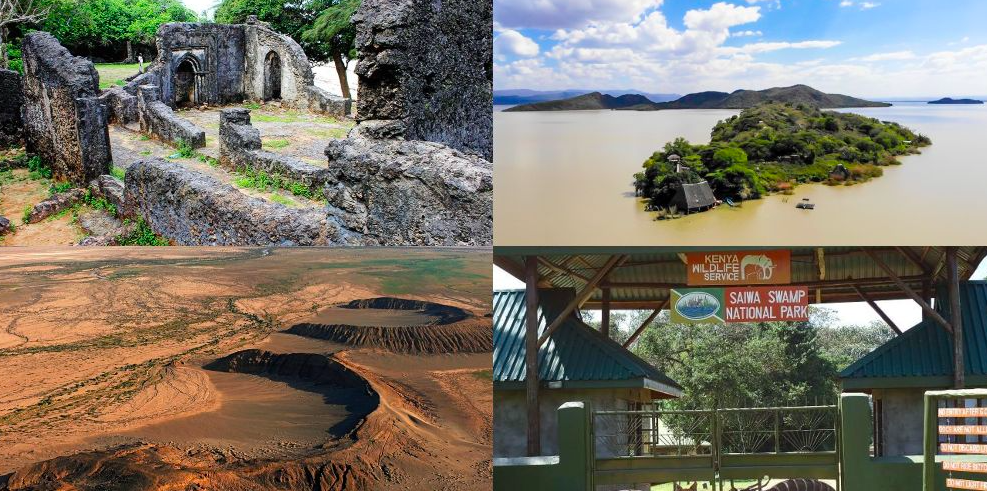
Shimba Hills, tucked inland from the coast near Diani Beach, holds Kenya's last breeding herd of the critically endangered sable antelope, alongside a coastal forest habitat that feels totally disconnected from the beach resorts just a short drive away. Meanwhile, up in western Kenya, Saiwa Swamp National Park protects the sitatunga, a shy, swamp-adapted antelope with splayed hooves built for wetland life. Both parks are small, walkable, and rarely crowded.
Canopy Walks And Forest Trails
Saiwa Swamp is unique among Kenya's parks for actually allowing visitors on foot, no vehicle required, with an elevated boardwalk and canopy walk that puts you eye level with forest highland birds and de Brazza's monkeys. Shimba Hills similarly rewards walkers, with waterfalls and forest trails threading through terrain that shelters over 400 recorded plant species.
How To Get There
Shimba Hills is about a 45-minute drive from Diani, making it an easy add-on for coastal travelers. Saiwa Swamp sits near Kitale, roughly six to seven hours from Nairobi by road, closer if combined with a Kakamega Forest trip.
Climb The Remote Wilderness Of Marsabit Mountain And Mathews Range
Crater Lakes And Elephant Herds
Marsabit Mountain rises out of the northern desert like a green island, its forested slopes cradling crater lakes that draw elephant herds down from the surrounding arid landscapes. The contrast is jarring in the best way, stepping from sun-blasted scrubland into misty forest within an hour's climb.
Multi-Day Hiking Routes
The Mathews Range, further east, offers multi-day hiking through terrain few foreign visitors ever attempt, largely because it demands proper logistics and local guiding through Samburu community lands. This is the kind of hike that rewards patience over Instagram timing.
How To Get There
Marsabit town serves as the gateway, reachable by road from Isiolo or by air. Mathews Range access typically routes through Wamba, arranged best with a specialized operator familiar with Samburu conservancy protocols.
Walk Through History At Gedi Ruins And Sokoke Forest
Swahili Ruins And Coastal Culture
The Gedi Ruins, hidden within coastal forest near Watamu, are the remains of a Swahili town abandoned centuries ago for reasons still debated by historians. Walking through the coral-stone walls and collapsed mosques, you get a sense of Swahili civilization that the beach resorts nearby rarely mention.
Rare Birds Of Sokoke Forest
Right next door, Arabuko Sokoke Forest protects three distinct vegetation zones and shelters the endangered golden-rumped elephant shrew, a creature found almost nowhere else on the planet according to records kept by the Kenya Forest Service. Birders come specifically for species found in no other Kenyan forest, making this one of the country's most significant, and most overlooked, conservation sites.
Destination | Best For | Approx. Distance from Nairobi |
|---|---|---|
Chyulu Hills | Horseback safaris, lava tubes | 4-5 hours by road |
Kakamega Forest | Birdwatching, primates | 7 hours road / 1.5 hours from Kisumu |
Chalbi Desert | Desert expeditions, culture | 2 days road via Marsabit |
Shimba Hills | Sable antelope, coastal forest | 45 min from Diani |
Gedi Ruins | Swahili history, birding | 30 min from Watamu |
How To Get There
Both sites sit near Watamu on the coast, easily reached by road from Malindi or Mombasa, roughly five to six hours from Nairobi or a short flight into Malindi.
Unwind At Hells Gate, Lake Naivasha, And Lake Bogoria
Hells Gate National Park lets you cycle or walk among zebra and giraffe without a vehicle, gorge walls rising on either side, a landscape that reportedly inspired parts of Disney's Lion King imagery. Nearby, Lake Naivasha offers boat rides among hippos and fish eagles, a gentler pace after dustier northern routes. Further into the Rift Valley, Lake Bogoria functions as Kenya's geothermal flamingo sanctuary, with over 200 bubbling hot springs and geysers lining its shore. This lake also falls within the Kenya Lakes System recognized under UNESCO World Heritage and Ramsar wetland designations, placing it in genuinely rare ecological company alongside its more famous cousin, Lake Nakuru.
How Should You Plan A Two-Week Off-The-Beaten-Path Trip?
Two weeks sounds generous until you start mapping distances across a country this size. My honest advice, formed from watching too many rushed itineraries fall apart, is to pick a region rather than trying to stitch together the whole map. A highlands and Rift Valley loop covering Hells Gate, Lake Naivasha, and Lake Bogoria pairs naturally with a few days in the Kinangop Highlands, where the Kinangop Plateau offers alpine meadows, bamboo forests, and a chance at spotting the endangered mountain bongo. Alternatively, a coastal loop linking Shimba Hills, Gedi Ruins, and Arabuko Sokoke gives you history, wildlife, and pristine beaches without the long northern drives.
Pace matters more than checklist completion. Build in slow mornings, a village visit or two, meals that aren't hotel buffets. The Gatamaiyu River area near Kinangop, for instance, rewards hikers willing to spend a full day rather than a rushed afternoon, tracing forest trails alongside the Gatamaiyu River itself through prime forest highland bird habitat.
What Makes These Destinations Safer And More Authentic Than Crowded Parks?
Fewer vehicles means wildlife behaves more naturally, less habituated to engine noise and camera flashes. Smaller visitor numbers also mean guides tend to know their patch intimately, often having grown up in these communities rather than rotating through a corporate safari circuit. That intimacy translates into a safari experience where you're not just checking off the Big Five but actually understanding habitat, behavior, and the conservation pressures each species faces, whether that's the sable antelope in Shimba Hills or the golden-rumped elephant shrew in Sokoke Forest.
FAQ
Are these underrated places safe for solo travelers? Generally yes, though northern destinations like Chalbi Desert and Marsabit require more planning and ideally a local guide, given the remoteness and limited infrastructure.
Do I need a 4x4 for all these destinations? Not all. Coastal sites like Gedi Ruins and Shimba Hills are accessible by regular vehicle. Chyulu Hills, Marsabit, and Chalbi genuinely need a proper off-road vehicle.
Which underrated destination pairs best with a Masai Mara National Reserve safari? Chyulu Hills works well logistically since it sits along similar southern routes, letting you combine a classic Mara experience with something quieter.
Conclusion
Kenya's tourist map keeps pointing everyone toward the same six dots, and frankly, that's a shame given how much this country actually holds. Somewhere between the lava tubes of Chyulu, the rainforest canopy of Kakamega, and the salt-crusted stretches of Chalbi, you start to understand that Kenya was never just one landscape wearing different filters. It's volcanic hills and coral reefs and alpine bogs, sometimes all reachable within the same two-week trip if you're willing to skip the brochure and build your own route instead.